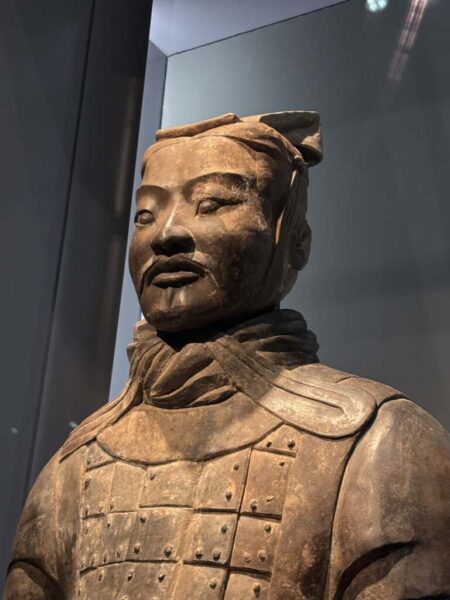
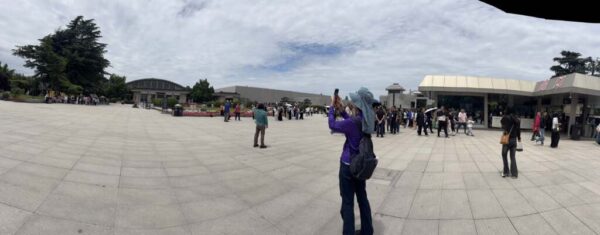
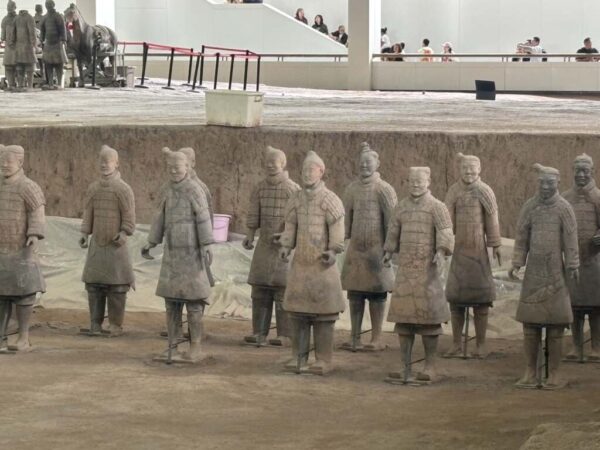
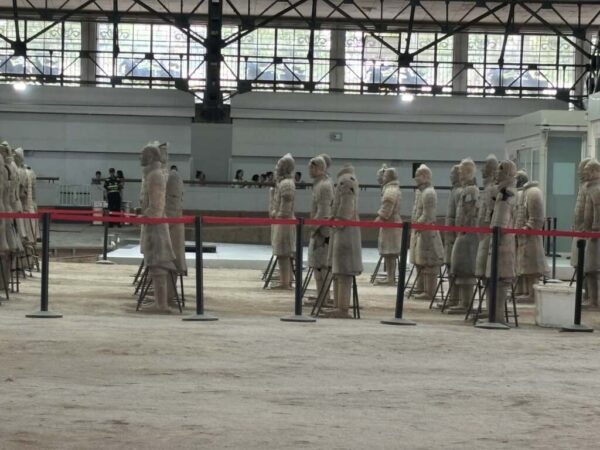
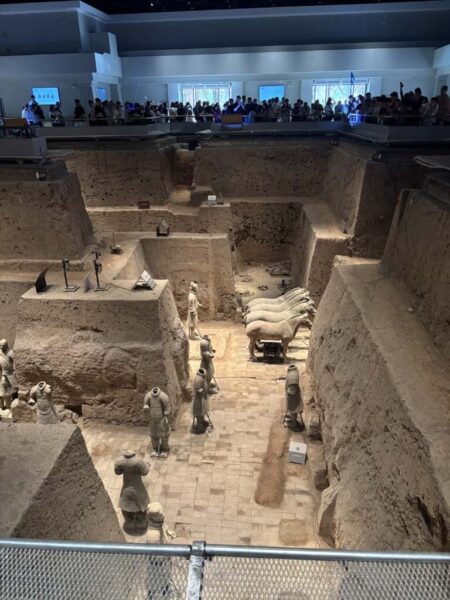
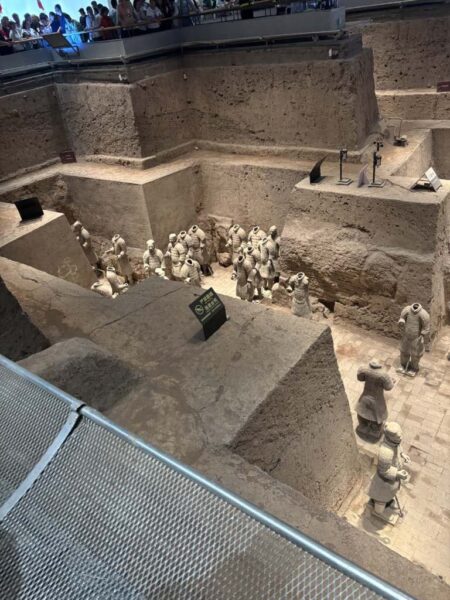
The site is outside the city of Xi’an, about 3 hours south of Beijing by bullet train. These clay warriors were built as a testament to Qin Shi Huang, the first emperor of China. They were sculpted and buried to “protect” him in his mausoleum between 210 to 209 BC. This part of our trip was truly fascinating and frustrating. You arrive at the complex, which is beautiful, and proceed to the museum, also beautiful, with the entire population of China by your side. Everyone of them there are the same time, all one and a half billion people – yes, this is definitely hyperbole. But as you look at these pictures, notice the crowds. You can’t move.
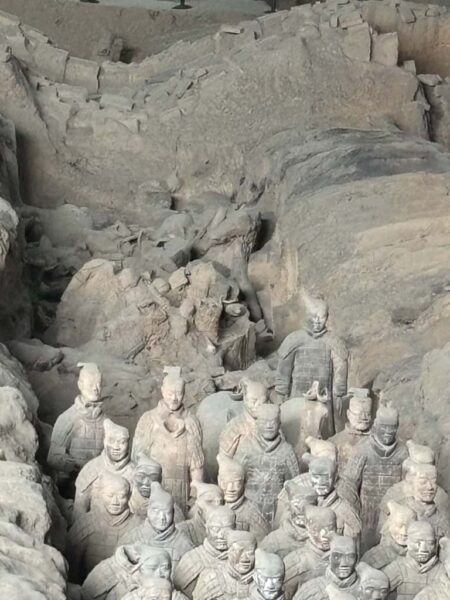
Since I enjoy history, learning that Qin Shi Huang was the first emperor because he unified China, bringing everyone under one leader was a great learning experience for me. Pretty cool, so when he died he thought he’d need the 8000 clay figures for protection. Still unclear what he thought might attack him, but at least he’d be ready.
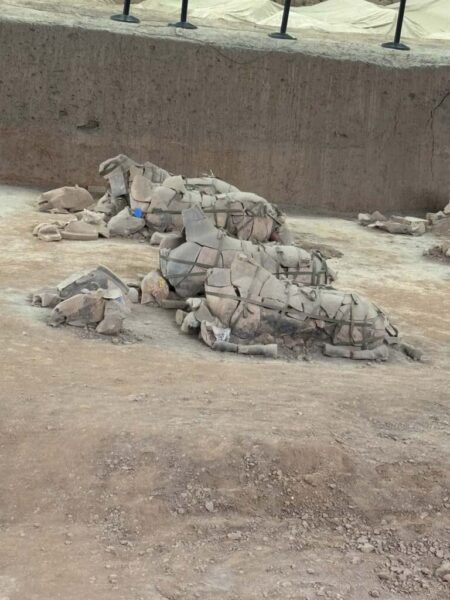
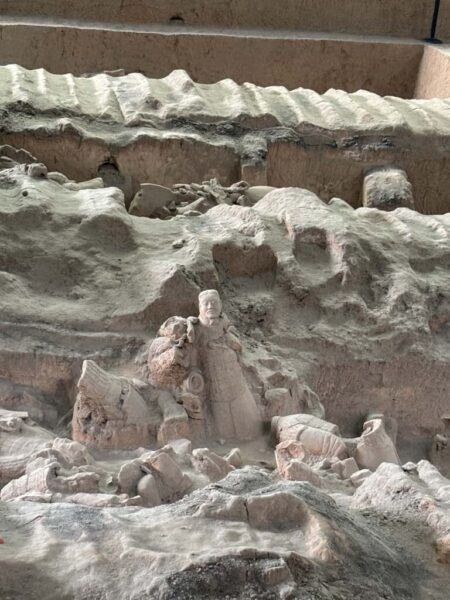
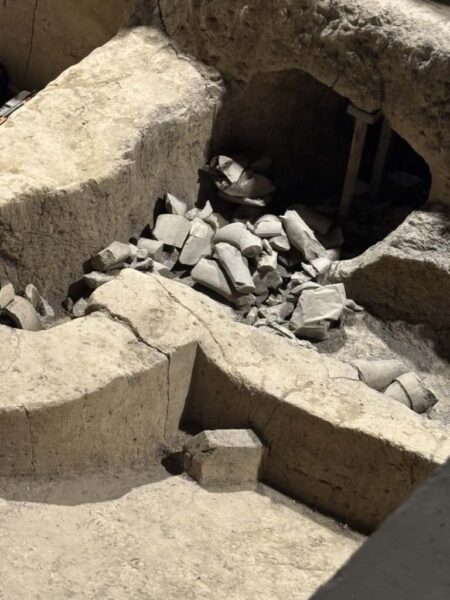
One last note. Hope I got this right… the sculptors (of which there were many many, used Terra Cotta because it would last, didn’t rust (bronze and other metals were out) and it was easy to work with. Over the thousands of years buried in the mausoleum these sculptures didn’t fare that well, as you’ll see, but the Chinese government has done a fantastic job of restoring them.
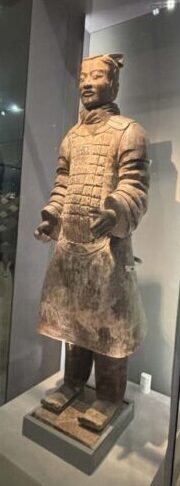
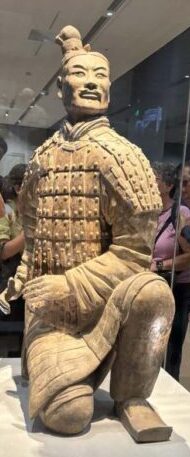
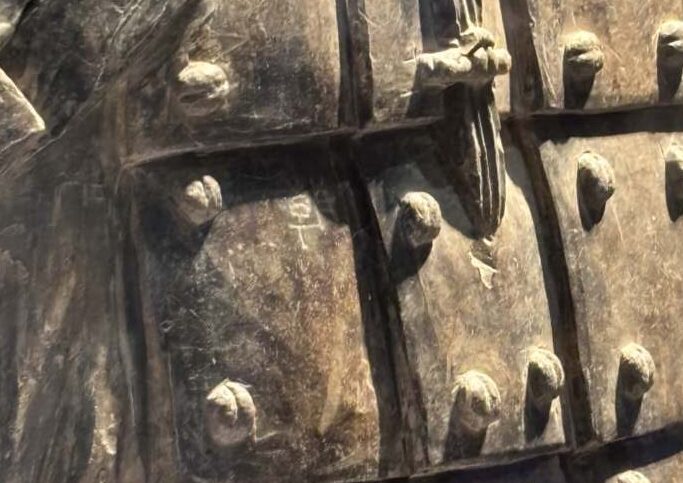
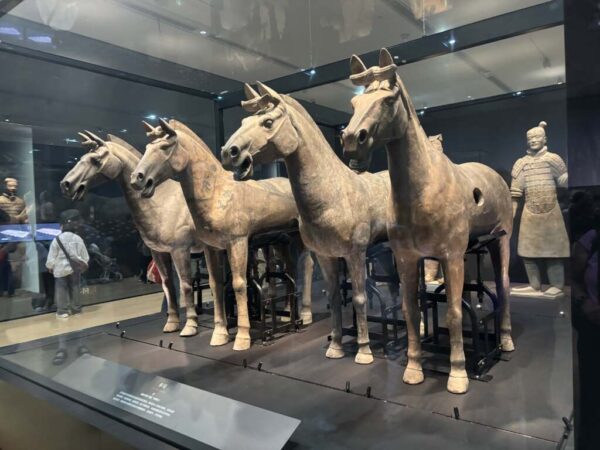
There are three “pits” each unique, but you have to start in the museum (to get a close up look at the statues). Interesting fact, The soldiers were positioned in straight lines looking forward. One single line is facing to the side (flank). The archeologists knew where to stop digging when they found the line facing to the “flank” because they knew these were forces to protect the main columns, no need to dig farther out.
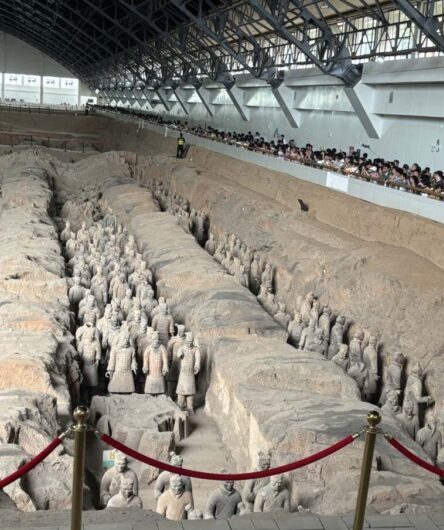
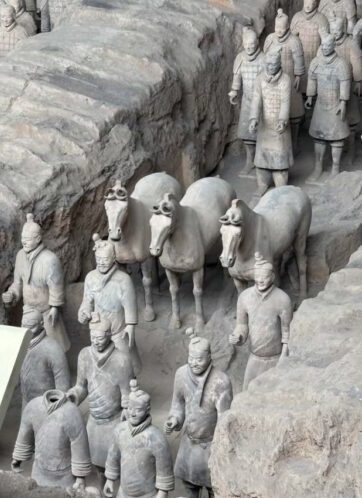
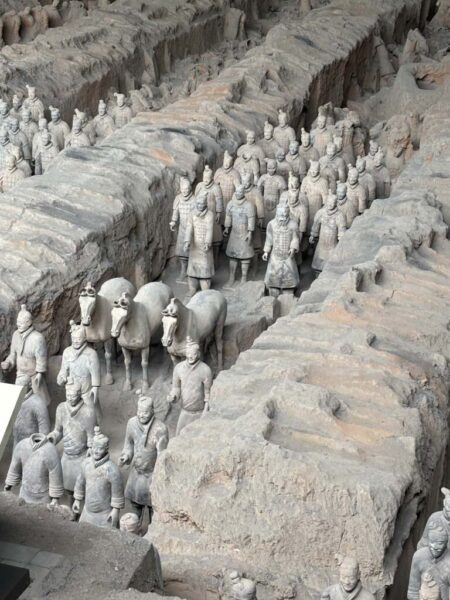
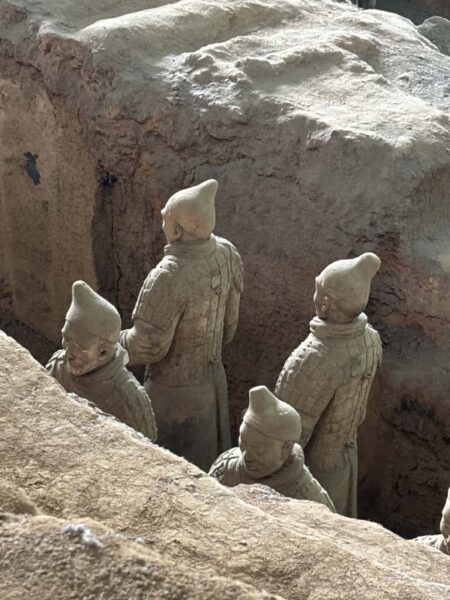
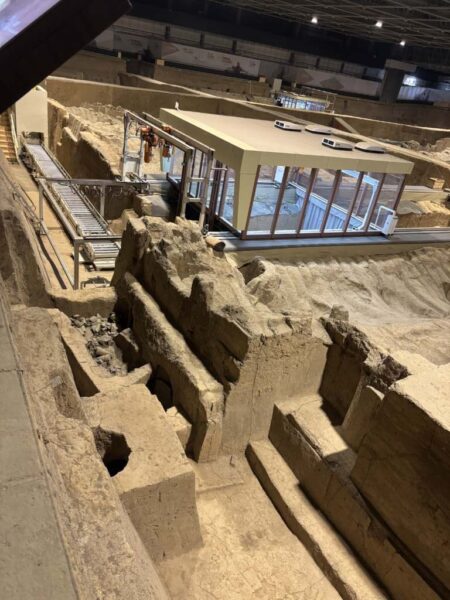
There are three pits, as I said. The first pit is huge and has all the warriors arrayed in lines. As you go to the back they’ve left some of the horses and warriors unrestored. It’s amazing that they could piece all of these statues back together.
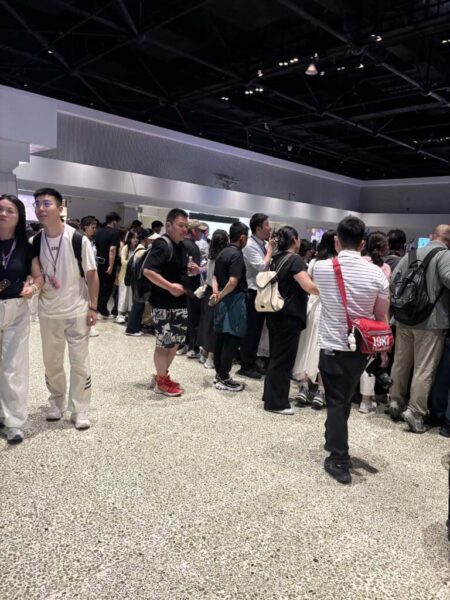
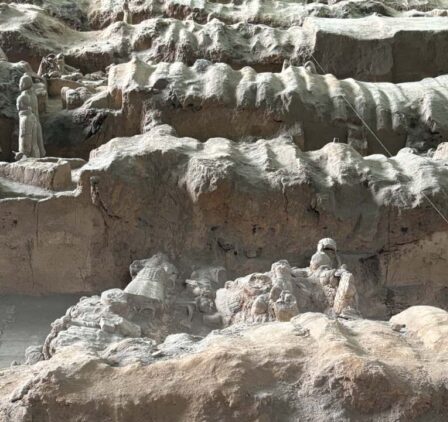
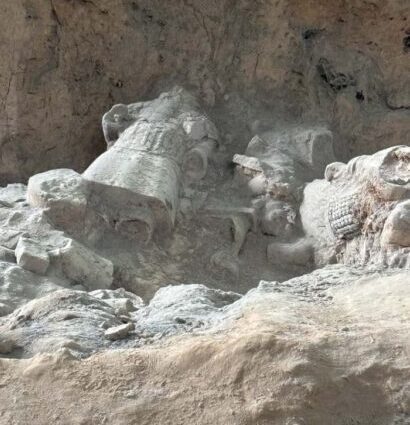
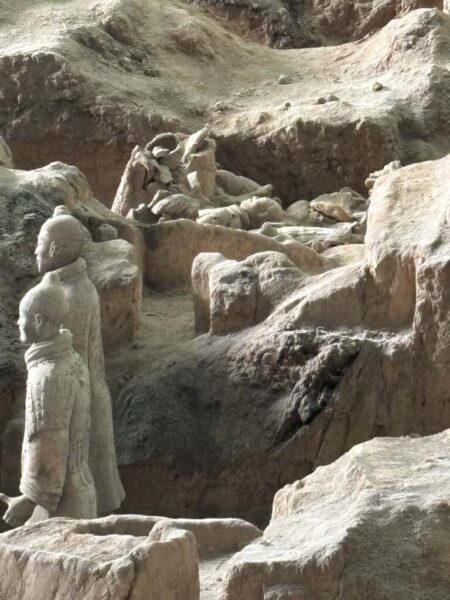
Pit #2, the headquarters unit.


Great pictures.